

When an Intercompany Issue Is a Process Design Problem
Recurring NF-e failures and costing inconsistencies in a global D365 programme pointed to a process architecture gap — not a configuration problem. What that looked like.
ASDM Solution
4/29/20264 min read
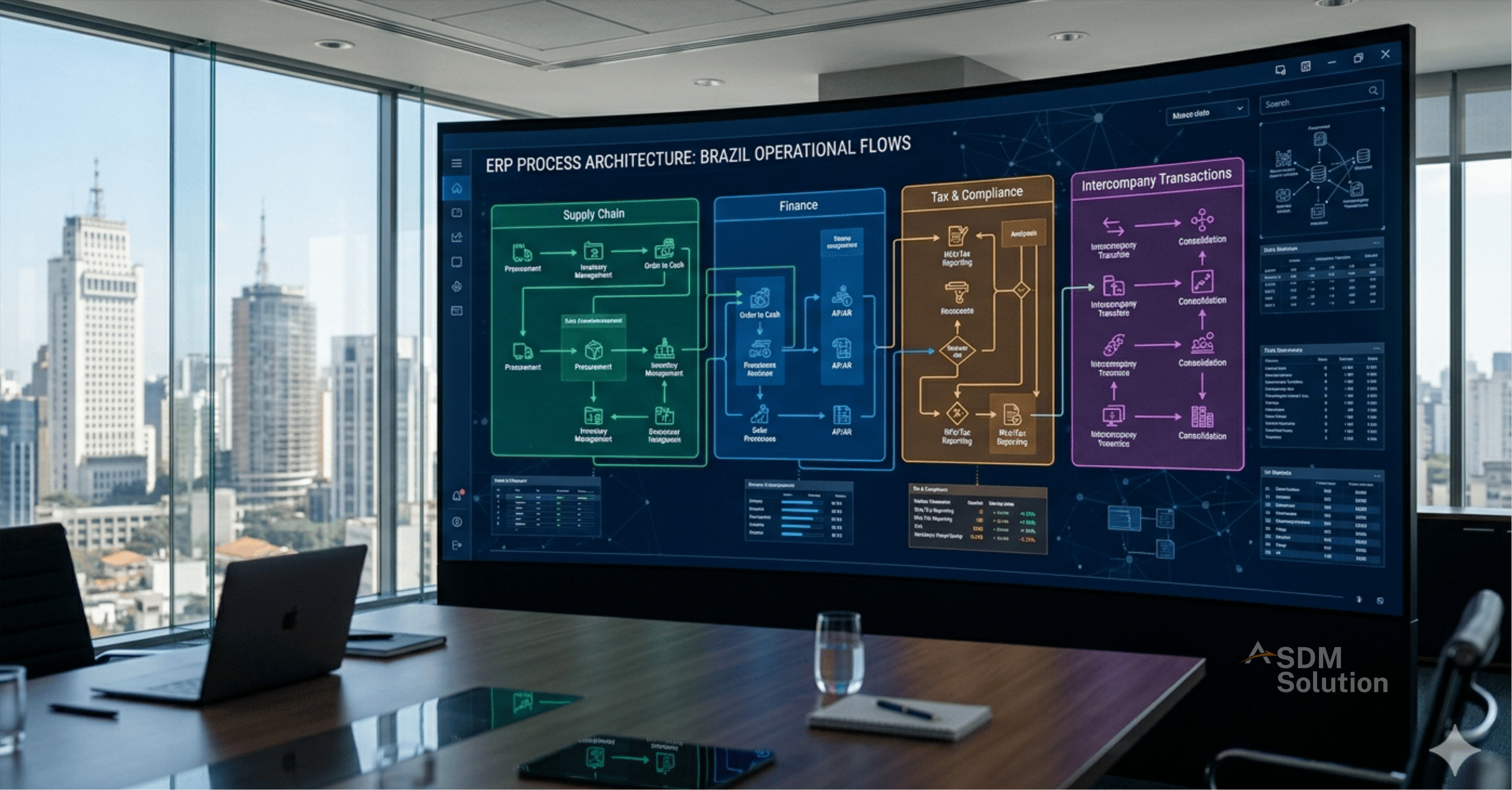
When an Intercompany Issue Is Actually a Cross-Functional Process Design Problem
The programme team had been working on the issue for weeks.
The system integrator had explored multiple configuration alternatives. Each one resolved part of the problem. None of them resolved all of it.
Recurring NF-e cancellation scenarios. Inconsistencies between inventory costing and accounting entries. Misalignment between tax reporting and operational transactions.
Each symptom, addressed in isolation, would improve — then reappear, or surface somewhere else in the process.
This is one of the clearest signals that the root cause of an issue is not in the configuration.
It is in the architecture of the process itself.
The Situation
A global organisation was operating an intercompany model involving multiple countries and legal entities.
The global supply chain process owner was responsible for defining the operating model and maintaining consistency across the organisation. The process also needed to comply with local tax, accounting, and customs requirements — including Brazilian NF-e electronic invoicing, tax reporting obligations, and import and customs requirements.
The ERP platform supported all of the required functionality.
The challenge was that the global process design had been built before its interaction with Brazil's fiscal requirements had been fully evaluated. Brazil's regulatory environment introduces specific obligations around NF-e issuance, import documentation, and cost allocation that interact with intercompany flows in ways that are unlike any other market.
Those interactions created gaps that the configuration work had not been able to close — because they were not configuration gaps.
What Brazil Creates in Intercompany Flows
In most markets, intercompany transactions involve straightforward movements between legal entities — transfer of goods, alignment of costs, financial settlement.
In Brazil, the same transactions also trigger NF-e issuance requirements at specific points in the flow, import documentation obligations when goods cross the Brazilian border, cost allocation requirements that interact with the local import process structure, and tax reporting that must align with both the operational transaction and the fiscal document.
These requirements do not sit alongside the global intercompany process.
They are embedded within it — at the transaction level, at the document level, and at the cost level simultaneously.
When the global process design does not account for how these requirements interact, the gaps between them produce exactly the symptoms the programme was experiencing: NF-e cancellations when the document sequence does not match the expected fiscal flow, costing inconsistencies when the global cost allocation structure conflicts with what the local import process requires, and tax reporting misalignment when the operational transaction and the fiscal document are out of sequence.
Why the Issue Persisted
The organisation was working with an experienced system integrator.
The implementation team had explored configuration alternatives thoroughly and in good faith. They were focused on finding a configuration path that would allow the system to support the existing process model.
What the situation required was a different question: not how the system should be configured to support the process — but whether the process itself needed to be redesigned to account for what Brazil's fiscal architecture requires at each stage of the intercompany flow.
That is a different kind of work. It sits at the intersection of global process design, local fiscal requirements, and system architecture — and it requires evaluating all three together rather than addressing each one in isolation.
What the Review Revealed
When the end-to-end intercompany flow was reviewed across all of its dimensions simultaneously, the root cause became clear.
The issue was not a missing configuration parameter.
It resulted from the interaction between multiple process domains that had not been designed together: global supply chain operations, intercompany logistics, Brazil's tax and fiscal requirements, and the accounting and costing rules that governed how transactions were posted.
Each domain had valid requirements. Each had been addressed within its own workstream. But the points where they intersected had not been designed as a coherent end-to-end flow.
Brazil's fiscal requirements created specific obligations at those intersection points — and the process, as designed, could not satisfy them without producing inconsistencies somewhere else.
Redesigning the Flow
Resolving the issue required cross-functional process design work.
Working with the global supply chain lead and regional stakeholders, the team reviewed the complete transaction flow: how goods moved between legal entities, how the import process was executed, how NF-e documents were generated at each step and in what sequence, and how costs were allocated and posted across the intercompany structure.
The objective was a process design that satisfied the global operating model, complied with Brazil's local regulatory requirements, and maintained accounting and costing integrity — not as a series of compromises, but as a single coherent end-to-end flow.
The Outcome
Once the process was redesigned to account for what Brazil's fiscal architecture requires at each stage of the intercompany flow, the recurring symptoms resolved.
NF-e cancellation scenarios were eliminated. Costing and accounting entries aligned. Tax reporting stabilised.
The ERP system had not changed.
What changed was the design of the process it was supporting.
The global process owner also gained something of lasting value: a process model that works consistently across jurisdictions, with Brazil's fiscal requirements embedded within it rather than working around it.
Final Insight
In complex ERP environments, recurring issues — particularly those involving NF-e failures, costing inconsistencies, or tax reporting misalignment — rarely resolve through additional configuration effort alone.
They persist because the root cause is in the architecture of the process, not in the settings of the system.
Brazil creates specific requirements at the intersection of supply chain, finance, and tax that most global process designs were not built to address — because no other market requires the same level of integration between operational and fiscal flows.
When those requirements are evaluated at the process design level, and the flow is redesigned to account for them, the system can support the business correctly and predictably.
When they are not, the symptoms continue to surface — in different forms, in different areas of the programme — until the underlying design is addressed.
ASDM Solution operates as an independent ERP transformation architecture advisory practice, focused exclusively on Dynamics 365 Finance programmes in Brazil.
If your organisation is experiencing recurring intercompany or compliance issues in your D365 programme — whether mid-implementation or post go-live — we'd be glad to have a conversation..
Ready to get your Brazil programme architecturally right?
Follow us
© 2026. All rights reserved.