When Global ERP Programmes Lose the Human Thread
Global ERP programmes in Brazil fail for technical and human reasons. When the right people are not in the right conversations, gaps in architecture follow.
ASDM Solution
9/9/20254 min read
When Global ERP Programmes Lose the Human Thread
ERP programmes are built on decisions.
Hundreds of them — made across months, across teams, across time zones. Decisions about how processes should work, how data should flow, how the system should respond to the specific scenarios the business encounters every day.
The quality of those decisions depends on who is in the room when they are made.
And in global ERP programmes that extend to Brazil, the right people are not always in the right conversations at the right time.
Two Teams, Two Perspectives, One Programme
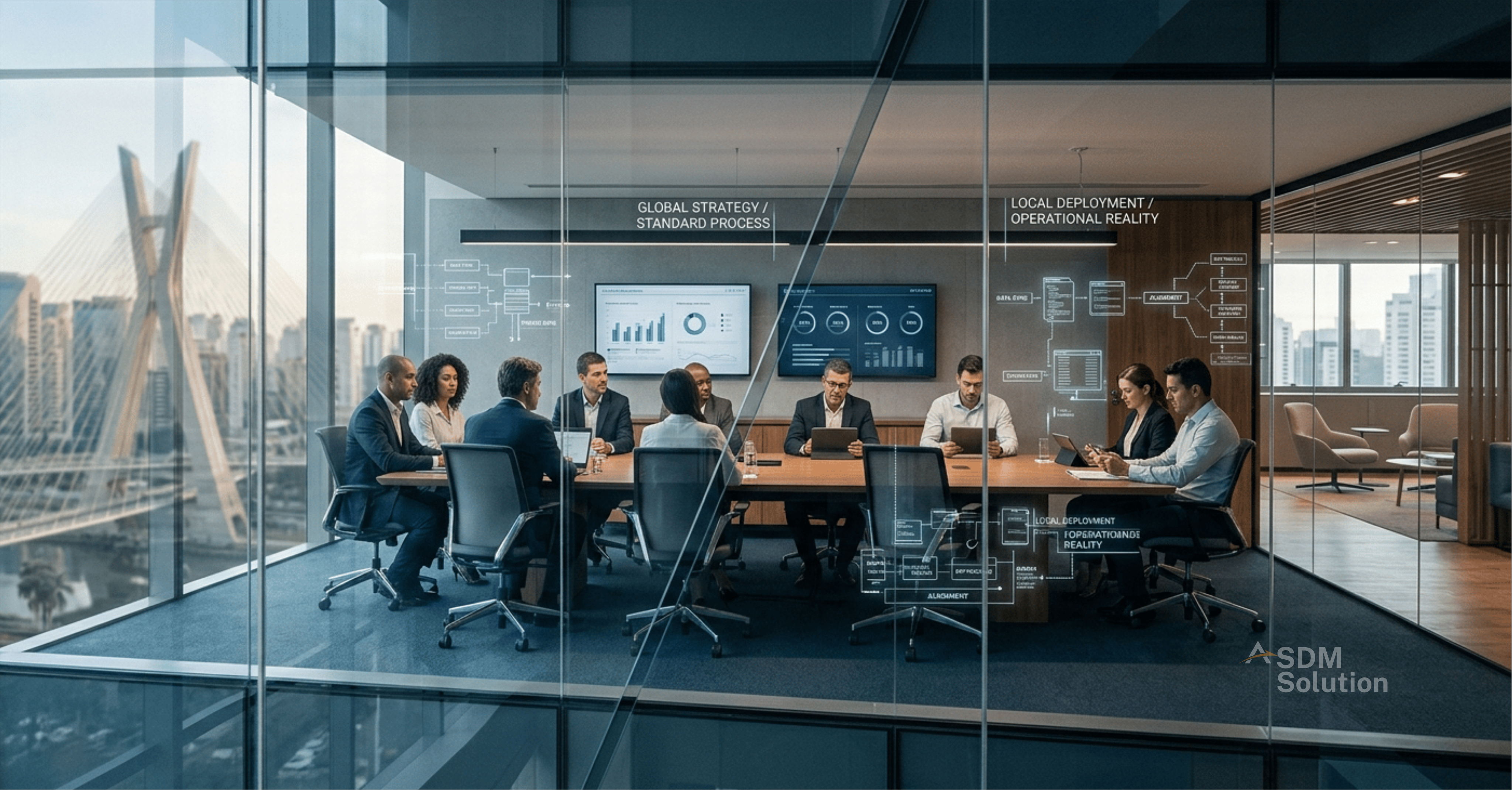
Global ERP programmes typically bring together two groups whose strengths are genuinely complementary — and whose working styles are genuinely different.
Global teams bring the architecture, the methodology, and the operating model. They move with the pace and discipline that large programme governance requires. They have delivered rollouts across multiple markets and they know how the system is designed to work.
Brazilian teams bring something the global team cannot have — deep familiarity with how business actually operates in Brazil. They know the fiscal scenarios that appear in daily operations. They understand the regulatory environment from the inside. They carry the knowledge of what works locally and what does not.
When these two groups work in genuine collaboration — when the global team's architectural discipline combines with the local team's operational knowledge — the programme benefits from both.
When they do not, the programme tends to move faster than it should — and discover the consequences later.
What Happens When the Conversation Breaks Down
Global teams naturally move toward decisions.
Brazilian teams naturally move toward alignment before decisions.
Neither instinct is wrong. But when they are not explicitly reconciled, the programme can reach what looks like a decision without everyone understanding what was actually decided — or why.
Design choices get locked in before the local team has had the opportunity to surface the fiscal scenarios those choices do not cover. Process flows get approved before the people who will operate them daily have had the chance to explain what Brazil's operational reality actually requires.
The gaps that result are not failures of intent.
They are failures of communication — specific moments where the right knowledge existed within the programme team but did not reach the right decision at the right time.
Those gaps show up later. In testing, when scenarios the design did not anticipate begin to surface. At go-live, when users encounter situations the system was not built to handle. After go-live, when adoption stalls because the solution does not reflect how the business actually needs to operate.
What Inclusive Programme Design Looks Like
The programmes that navigate this well are not necessarily the ones with the most experienced teams or the largest budgets.
They are the ones where the communication architecture of the programme — how decisions are made, who is included in which conversations, how knowledge flows between global and local — is treated with the same care as the technical architecture.
This means involving Brazilian operational and fiscal knowledge at the design phase — not as reviewers of decisions already made, but as contributors to decisions still being formed.
It means creating the space for local teams to surface the scenarios, the edge cases, and the fiscal realities that global templates do not anticipate — before those scenarios become production issues.
It means ensuring that when architecture decisions are made, the people who will live with those decisions understand what was decided and why — not just what the system will do, but what Brazil's fiscal requirements demand and how the solution addresses them.
This kind of structured knowledge transfer is not a training programme. It is part of how the architecture work gets done — embedding understanding in the programme team as the design develops, so that the solution reflects the combined knowledge of everyone who needs to make it work.
The Bridge Between Global and Local
One of the consistent patterns in programmes that struggle with adoption is that global and local teams developed parallel understandings of what the solution was supposed to do — and discovered the gap after go-live.
The global team understood the architecture. The local team understood the operational reality. Neither fully understood how the two needed to connect.
Bridging that gap is not a change management intervention that happens after the solution is built. It is a programme design decision that needs to happen while the solution is still being designed.
It requires someone who understands both sides of the equation — the global ERP architecture and the Brazilian fiscal and operational reality — and can create the conditions for genuine cross-functional alignment before decisions become permanent.
When that bridge exists throughout the programme — not just at milestone moments, but in the working sessions where design decisions are actually made — the programme produces something more than a technically correct solution.
It produces a solution that the people who need to operate it understand, trust, and adopt.
Final Insight
Successful ERP projects are not built on technology alone — they are built on people.
The technical architecture matters enormously. Getting Brazil's fiscal requirements right is not optional, and the consequences of getting them wrong are real and expensive.
But the technical architecture only works if the people who design it, implement it, and operate it share a common understanding of what it needs to do — and why.
Building that understanding across global and local teams, across technical and operational perspectives, across the distance that large programmes inevitably create between the people making decisions and the people living with their consequences — that is as much a part of getting Brazil right as any configuration decision.
When both are done well, adoption is not the hard part.
ASDM Solution operates as an independent ERP transformation architecture advisory practice, focused exclusively on Dynamics 365 Finance programmes in Brazil.
If your programme is bringing together global and local teams and you want to ensure the right knowledge is reaching the right decisions at the right time — we'd be glad to have a conversation about how we work.
Ready to get your Brazil programme architecturally right?
Follow us
© 2026. All rights reserved.